Written by: A. Patrick Imbardelli, Partner, Velocity Ventures
It is close to midnight. A guest steps out of a taxi after a long-haul flight, with a board presentation at eight the next morning and no patience left for repeating a request they have made before.
The hotel has an opportunity to make that arrival easier. It can tell them how many points the stay will earn. It can also show that it already knows what matters tonight: the quiet room away from the lift, breakfast to the room at 6:30, the late checkout already confirmed.
Points give the guest a tangible reward. Recognition and reliable service help build a relationship that gives them a reason to return.
As a former hotel operator and brand leader, the question I always wanted answered was not how many members we had enrolled, but whether our loyalty programme was making the stay genuinely better. Were we giving that guest a reason, an emotional one, to choose us again?
The empty chair in the boardroom
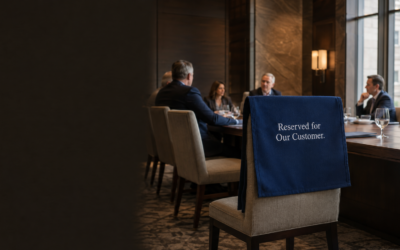
In my years leading hotel businesses at IHG and Pan Pacific, I kept a chair in the boardroom. It had its own cover, and across it in large letters were the words “Reserved for Our Customer”.
Its purpose was simple. Every team that met in that room, whether finance, development, operations or marketing, was reminded that our most important stakeholder was never physically present, and that every decision we made would ultimately be lived by a guest. Hotel loyalty deserves exactly the same discipline.
Earn, burn and the question behind it
Points matter. They give guests a tangible return, influence where frequent travellers book and can turn a year of business trips into a family holiday. Earn and burn is the currency of any loyalty proposition, and its credibility rests on how easily points are earned, how freely they can be redeemed and what they actually buy.
But beware the familiar comparison with airline miles: a larger reward from an expensive flight is not necessarily a better percentage return, nor does a smaller hotel reward necessarily matter less to the guest.
The more strategic question for brand leaders, and ultimately for hotel company CEOs, is what happens alongside the reward.
The commercial stakes are significant. CBRE’s analysis of major hotel loyalty programmes found that members accounted for an average of 52.8% of occupancy in 2024. For owners and operators, loyalty programmes have become a significant source of demand.
Yet membership is not loyalty. Guests can belong to several loyalty programmes. Joining tells us a guest has opted in, not whether they chose us for the relationship or simply because our points suited their next redemption. The programme needs to support both practical value and a relationship the guest wants to continue.
That distinction is won or lost during the stay.
From recognition to anticipation
Recognition is too often reduced to a warm greeting and a nod to status. That is the starting point, not the destination.
Consider the returning business traveller who asked for a quiet room last time. True recognition means that preference is checked before arrival, a suitable room is allocated where available and the guest is told what has been arranged without having to ask. For today’s frequent traveller, that is no longer a benefit or a pleasant surprise. It is the baseline expectation.
Delight begins where expectation ends. It is the confirmed late checkout that turns a frantic departure day into a calm one before an evening flight. It is the family arriving to find the connecting rooms ready, the cot made up and a small welcome for the children, lifting an anxiety the parents had carried since they booked. These moments carry emotional weight precisely because they solve real problems and give guests a reason to remember the hotel.
Member research offers a useful perspective. GHA’s 2026 study, supported by Bond Brand Loyalty and drawing on more than 9,000 GHA DISCOVERY members, found that room upgrades were the most preferred stay benefit, at 59%, with breakfast and late checkout also featuring strongly. The same research found that 58% appreciated the ease of earning and spending DISCOVERY Dollars.[2] Guests value both the reward and the experience. These findings describe GHA’s own members (I led Pan Pacific Hotels Group, a GHA member brand), but they are a useful prompt for any operator to test its proposition.
An upgrade is valuable when it improves the visit. Late checkout matters when it gives the guest time they genuinely need. Once promised, these are no longer extras. They are commitments to be met each and every time.
Delivery begins at the point of reservation
The loyalty promise is made by the brand but kept by the hotel, and it begins the moment the booking is made, not when the guest reaches reception.
The front desk may confirm late checkout, but housekeeping must plan around it; breakfast inclusion must be visible in the restaurant. Every department contributes to one promise, and that promise has to be embedded in how everyone thinks and acts, at every level and in every area of the hotel.
I would start with the daily arrival briefing. Which guests have confirmed benefits? Which requests remain open? Who owns the follow-up? A guest should never have to explain their membership at reception and again at breakfast, and no request should vanish when the afternoon shift hands over to the evening team.
Technology can help teams keep that promise. Connected guest profiles, reservations and service requests are now the foundation. AI may help summarise relevant arrival information and flag promised benefits at risk. Connected systems should also carry requests across shifts and departments. The test is simple: does it save the employee time and help them do the right thing?
But systems alone do not create delight. People do. Staff need the authority to act on behalf of the guest. If every reasonable request requires finding a manager, the guest feels the delay and the employee loses confidence. Clear boundaries should define what teams resolve themselves and when to escalate.
Recognition also demands discretion. A preference from a business trip may be irrelevant on a family holiday, and no guest wants their history recited across a crowded lobby. The guest should always feel comfortable with what the hotel knows, and how it uses it.
Promises must survive a full house
A sold-out night, with late departures and rooms still waiting to be serviced, is precisely when loyalty is tested.
Guaranteed benefits must be honoured. Benefits subject to availability should be explained honestly and decided consistently, so staff understand them and guests can trust them. If an upgrade is not possible, say so early and look for what else would help: a room in a preferred location, a workable departure arrangement, or a thoughtful gesture that shows the guest they were considered.
Nothing erodes confidence faster than a guest feeling they must negotiate for something they were encouraged to expect.
Service recovery deserves the same rigour. Points may be appropriate compensation, but first fix the problem: someone takes ownership, coordinates the response and checks that the guest is genuinely satisfied. A points credit offered while the original problem remains unresolved leaves the guest doing the work. Handled well, recovery can rebuild trust and give the guest a reason to return.
Owners need to see the return
Recognition must also work commercially. CBRE found programme fees averaged 2.2% of rooms revenue across its 2024 US hotel sample, before the cost of benefits such as breakfast, lounge access and upgraded rooms.
Those costs, and the value created, must be understood at property level. I would want to know whether members return, how they book, what the hotel earns after acquisition and benefit costs, whether promised benefits were actually delivered and which failures keep recurring in guest feedback.
The trade-offs are real upgrades can use inventory that might otherwise be sold, late checkout complicates turnaround, breakfast has a cost. A well-run hotel plans for these obligations, measures their effect and gives teams workable guidance. The alternative, judging loyalty by enrolment numbers while properties absorb promises they cannot consistently keep, serves neither owner nor guest.
At Pan Pacific, we assessed corporate customers on their total spend across the hotel, not just room rate. Loyalty deserves the same lens. Loyal guests may spend more in the hotels they have chosen, with the brands they belong to, in the places where they feel at home. The return should reflect the guest’s contribution over time, after the cost of serving them.
What I look for as an investor
Today, at Velocity Ventures, I see real opportunity in technology that helps hotels deliver this relationship consistently. The most valuable solutions will often sit behind the scenes rather than in front of the guest: the platform, the glue that brings the jigsaw together so the guest simply experiences a hotel that seems to know them.
That might a clear view of a guest’s current needs, requests carried seamlessly across shifts, or rewards that are easier to understand and redeem.
When founders pitch to us, my question is simple: show me what changes for the employee during a busy shift, and what the guest feels as a result. A system that adds screens and manual work needs a very convincing case.
Hotels have always depended on people noticing what matters and following through. The best technology, AI included, will not replace that instinct. It will help that care reach more guests, more reliably, and free our teams to do what they do best: exceed expectations.
Points may help a guest choose us. The stay is our chance to earn something far more valuable: their confidence that we will look after them, and their desire to return.