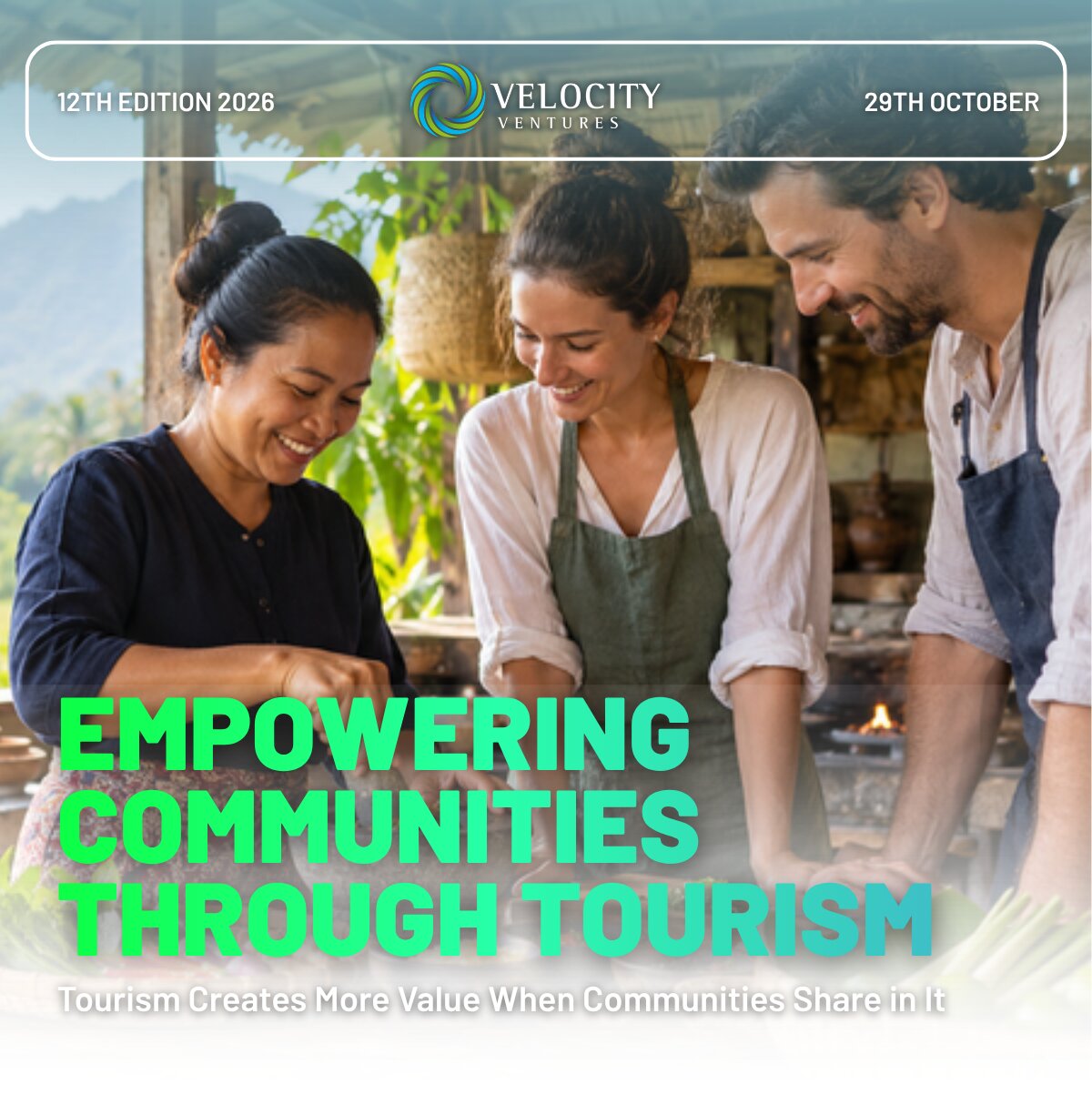
Local ownership, cultural stewardship and fair work can strengthen the experiences that Travel & Hospitality businesses bring to market.
|
By: Velocity Ventures Editorial Team
|
A guest books a village homestay, learns a recipe from the host and leaves with a story worth sharing. Behind that simple experience sit several business decisions: who sets the price, who receives the payment, how the visit is organised and whether the host can choose what to share. Those decisions determine how much value stays with the people who make the destination distinctive.
|
Social sustainability brings these questions into the everyday work of Travel & Hospitality. It includes opportunities for local enterprises, decent working conditions and community influence over cultural experiences. A business can make environmental progress while still leaving these relationships underdeveloped. For operators and investors, understanding them provides a fuller picture of what supports the product and where its risks lie.
|
An announcement this month makes the practical nature of that work clear. On 15 October, Planeterra named the recipients of its 2026 Community Tourism Fund, awarding 22 grants across 19 countries, alongside training and mentorship. One supported project, at Ban Huay Thom in Laos, plans a permanent staircase with handrails to replace a difficult temporary access route used by residents and visitors.
|
The staircase is planned infrastructure, rather than a completed outcome. Its purpose illustrates something easily missed in sustainability messaging: a relatively modest improvement can address a real constraint on participation. Safer access matters to the people living there and to the experience offered to guests. Community benefit begins with understanding what people actually need.
|
Give communities a stake in the experience
|
Batu Puteh in Sabah offers an established example of community organisation. UN Tourism’s 2021 village profile describes how local tourism associations joined together to form the KOPEL cooperative in 2003. Homestays, guiding, boat services and cultural activities created different ways for residents to participate, alongside work to protect local culture and the surrounding ecosystem.
|
For a tour company or hotel, that model suggests a more useful partnership than simply adding a village stop to an itinerary. Hosts need workable booking schedules, clear cancellation terms and reliable payment. Local suppliers need a fair opportunity to compete for business. Where revenue is shared, agreements should make the calculation and payment process understandable to everyone involved.
|
These arrangements can improve the guest experience by supporting dependable delivery and a closer connection with the destination. But the commercial case should be tested. An operator needs to know whether guests book again, suppliers remain engaged and the experience can be delivered consistently without placing unreasonable demands on the community.
|
Let cultural custodians shape the product
|
Cultural preservation also requires authority over how a place is presented. At a Hoi An heritage-tourism workshop on 17 October, organisers framed the challenge as balancing conservation with product development and sustainable growth. The discussion is a useful reminder that a destination’s appeal depends on protecting the character that visitors come to encounter.
|
For Indigenous tourism and other cultural experiences, community members should help determine what can be shared, who interprets it and what remains private. Intrepid’s February 2025 partnership with Indigenous-owned 100% Finke River Culture & Adventure, developed around a First Nations-guided Larapinta Trail trip, provides an earlier example of bringing local cultural knowledge into the experience through a specialist operator.
|
The operating details matter. Guest briefings, photography guidance and appropriate group sizes should reflect local expectations. Artisans should be paid for their time and expertise when teaching a skill, rather than being expected to offer a demonstration in the hope of a sale. Cultural knowledge deserves a place in the commercial agreement.
|
Make hospitality a route to progression
|
Hotels can contribute through employment as well as procurement. Hiring locally creates an entry point; training and advancement determine whether that opportunity develops into a career. Accor’s Reveal Talent programme, described in a November 2024 company account, uses mentoring, departmental exposure and training to help employees prepare for greater responsibility, with less emphasis on formal qualifications.
|
Fair work also requires safe conditions, clear terms and practical ways to raise concerns. Community projects funded through corporate giving can complement this work, but the day-to-day treatment of employees, contractors and suppliers remains central. Measuring participation alone gives an incomplete view. Progression, retention and the quality of work tell a more useful story.
|
Technology founders can help smaller enterprises participate by reducing administrative friction. Local-language onboarding, simple inventory tools, transparent commissions and prompt settlement can make digital distribution more accessible. Procurement platforms can help hotels discover local producers. The important design question is whether the system fits a small operator’s resources and working practices.
|
For investors, the strongest social-impact claims describe a mechanism and provide evidence. Relevant measures include local supplier spending, payment times, employee progression, repeat bookings and community involvement in decisions. Better relationships may support a more resilient business, but their effect on revenue or margins needs to be demonstrated. Tourism’s social value becomes more credible when the people creating the experience can also help shape its future.
|
| |
|
Know a startup reshaping the industry? Share it with our investment team: [email protected]. To unsubscribe, click here.
|
UE Square Office Tower, 83 Clemenceau Avenue, #04-01, Singapore 239920
|
© 2026 Velocity Ventures Pte. Ltd. All rights reserved.
|
| |
| |
| |