If anyone can buy luxury, what makes premium travel truly matter?
Written by: A. Patrick Imbardelli
Luxury travel used to signal success by having access to exclusive options. I do not think that definition survives intact. In my years leading Pan Pacific Hotels Group and earlier IHG Asia Pacific, I learned that the real premium was never marble alone. It was the clarity of the brand promise, the relevance of the experience, and the confidence of execution. That instinct now has hard market evidence behind it: luxury tourism and hospitality are expected to outgrow every other travel segment, especially in Asia.
When I was CEO, I came to see brand as a promise that must be delivered, not merely advertised. We integrated brands, people, planning, and distribution to improve the reservation experience and ready the business for growth. Those lessons matter even more now, because luxury is no longer being judged by opulence alone. It is being judged by personalization, purpose, wellness, access, and increasingly whether sustainability is not just claimed.
Why Luxury Has Changed
The stereotype of the luxury traveller is now no longer one dimensional. Research shows that 35% of the luxury-travel market is made up of travellers with net worths between USD 100,000 and USD 1 million, while 80% of luxury leisure spending comes from people under 60. That tells me the category is broader, younger, and more dynamic than most legacy positioning assumes. It is no longer enough to design for the ultra-wealthy traditionalist alone.
Just as important, the motivations have shifted. Advisor data for 2025 shows affluent travellers prioritizing celebration, exploration, rest, personal enrichment, health and wellness, and connection with local people. They still want beach resorts, comfort, and privacy, but they also want authenticity, cultural immersion, and exclusive use. In other words, modern luxury travel is moving from display to meaning. The memory matters as much as the amenity.
That does not mean opulence disappears. It means opulence must now carry emotional weight. A beautiful suite still matters. So does a flawless arrival. However, the new premium lies in whether the guest feels known, restored, and connected to something real. That is a harder standard, and a far more valuable one.
Why Access Beats Excess
To me, luxury travel used to signal success through excess: marble lobbies, rare vintages, and rooms designed to prove that only a few could enter. That was a world of visible status. Today, especially in tech-enabled travel, that definition is fading. The real signal of luxury is no longer how much can be displayed, but what kind of access can be unlocked. It is the freedom to enter the right room, meet the right guide, discover the hidden place, and shape an experience around personal meaning rather than public spectacle. Access has begun to beat excess. There’s a simple test: are you travelling to show something, or because you truly have the abundance to enjoy it? Old luxury was about showing status – proving that you were inside the velvet rope. New luxury is about sharing abundance – curating time, experiences, and connections that matter to you, whether or not anyone else ever sees the photos.
This is why hyper-localized experiential travel matters so much. The PARKROYAL idea of being a gateway to the locale remains powerful because it recognizes that premium travel is not about insulating the guest from place. It is about introducing the guest to place with taste, trust, and care. Current PARKROYAL positioning still leans into local guides, culinary and artisanal programming, heritage, and authentic local culture, which reinforces something I have long believed: once a brand helps a traveller feel the soul of a destination, it moves from accommodation to memory-making.
That is the new form of status. Not just getting there first but getting there properly. Not just buying entry, but being welcomed in.
Why AI in Hospitality Must Feel Invisible
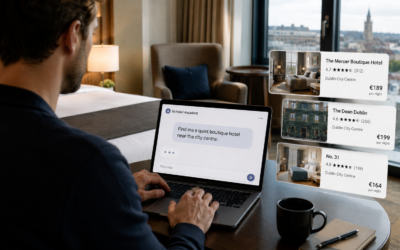
I feel strongly that technology should not sit awkwardly beside service like an extra appliance in the room. In hospitality, it is increasingly becoming the service. I wrote recently that the front desk is not what it used to be, because travelers now arrive with expectations shaped by data, design, and digital intuition. Broader industry research points in the same direction, from hyper-segmentation and personalized trip planning to digital check-in, mobile keys, and end-to-end friction reduction.
For brands, that means AI in hospitality must be practical before it is theatrical. The real opportunity is not chatbot novelty. It is using data and intelligence to remove waste, anticipate needs, support staff, and communicate with precision. McKinsey’s work on agentic AI points to use cases such as room allocation based on guest history, predictive maintenance, dynamic housekeeping management, and more relevant ancillary offers. That is where the economics and the guest experience start to align.
Yet, the human truth remains unchanged. Premium travel still depends on empathy, grace, and judgment. Technology should elevate those things, not flatten them. The best luxury hotels will not feel automated. They will feel astonishingly attentive, because the machinery underneath has become smarter and more invisible.
Why Wellness Travel Is the New Status Symbol
Wellness is no longer a treatment room add-on. It is becoming one of the central engines of premium travel demand. The global wellness economy reached USD 6.8 trillion in 2024 and is projected to approach USD 9.8 trillion by 2029. Wellness tourism alone was valued at USD651 billion and forecast to grow 16.6% annually to 2027. At the same time, younger consumers increasingly treat wellness as a daily, personalized practice rather than an occasional indulgence.
This is why I see luxury moving towards precision wellness. Six Senses uses non-invasive smart-tech wellness screening and is openly blending biometrics, longevity, and local rituals in its programming. SHA frames its value around hyper-personalized programs, advanced diagnostics, and measurable transformation. Even luxury editorial guidance from Sofitel points to medical-grade diagnostics, biomarker analysis, and preventative care entering the premium travel mainstream. The old spa model was relaxation. The new model is optimization, recovery, longevity, and healthspan.
What fascinates me is that this is not entirely new. St Gregory, established under Pan Pacific in 1997, has long blended time-honoured therapies with modern treatments across four pillars: Therapy, Fitness, Aesthetics, and Active-Ageing. In many ways, the industry has been moving toward this future for years. What has changed is the seriousness of the consumer, the sophistication of the tools, and the willingness to pay for feeling better, not just being pampered.
In the new luxury landscape, wellbeing has become its own form of prestige. The premium is no longer just in what the guest consumes. It is in how the guest feels after leaving.
Why Sustainable Luxury Travel Must Be Tangible
For too long, sustainability in hospitality could hide inside statements, pledges, and polite abstractions. That era is ending. In premium travel, guests and capital partners increasingly want proof. Six Senses properties have received certification from a GSTC-accredited body, and the brand links each stay to a Regenerative Impact Fund equal to 0.5% of revenue for local community, habitat, and wildlife projects. That is the direction of sustainable luxury travel now: less vague virtue, more third-party accountability and visible local impact.
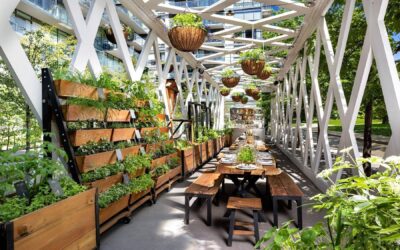
You can also see this shift in the physical product. In Singapore, Pan Pacific’s luxury portfolio now showcases how premium accommodation can blend biophilic design with solar panels, rainwater harvesting, urban farming, AI-powered weather-based water optimization, food resilience, and low-waste dining. That is important because it reframes sustainability as part of the guest experience itself. The stay feels greener, calmer, fresher, and more rooted in place. When design, technology, and environmental responsibility move together, sustainability stops feeling like a compromise and starts feeling like sophistication.
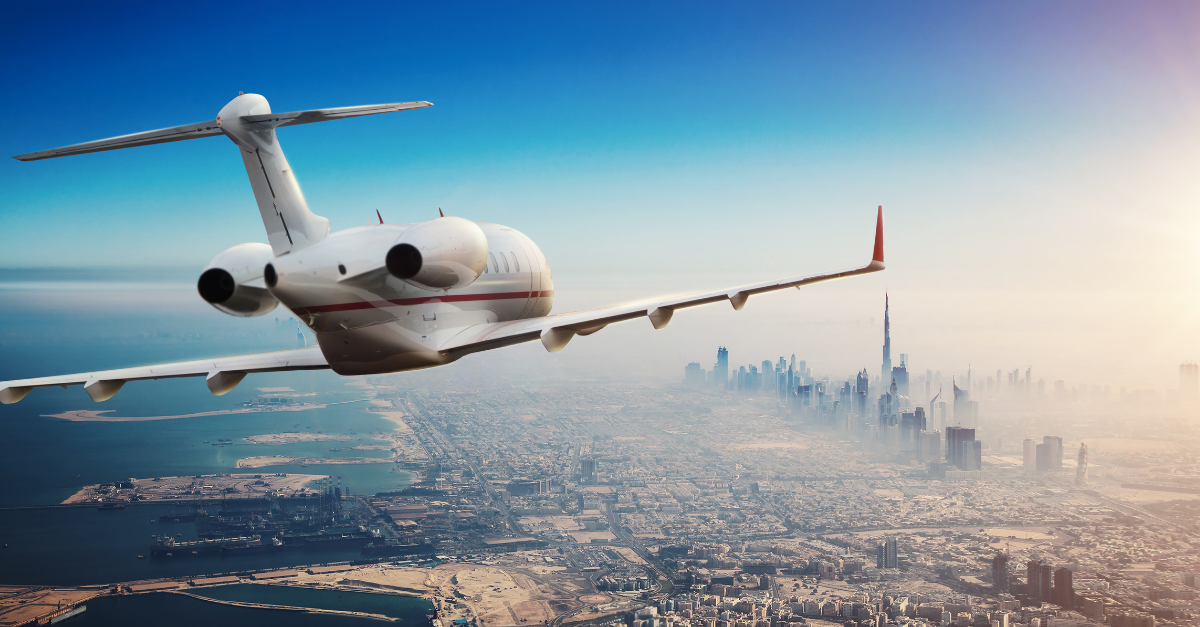
Air access is changing too, even if imperfectly. IATA says sustainable aviation fuel can reduce lifecycle CO2 emissions by up to 80%, yet it still accounted for only 0.3% of global jet fuel production in 2024. That scarcity explains why programs from Wheels Up and VistaJet matter. They are early signs that premium mobility, including private aviation memberships and charter models, is being pulled toward more traceable lower-carbon pathways. The new premium will reward credible progress over theatrical perfection.
What This Means for Brands and Investors
From an investor and brand perspective, the message is clear. Scale still matters, but scale without soul will struggle. Industry research shows that 70% of luxury-hotel properties are currently independent, yet 78% of planned supply is chain or franchise, and 41% of luxury-hotel pipeline rooms are in Asia. That tells me the opportunity is not to industrialize luxury. It is to systemize trust while protecting individuality. Brands that can combine recognition, service excellence, local immersion, and digital intelligence will have a structural advantage.
The accommodation play is also widening beyond guestrooms. Branded residences in Asia Pacific have grown 55% over the past five years, while the global average premium for branded residences stands at 33% and rises to 39% in resort locations. Marriott International ended 2024 with 658 luxury hotels, resorts, and branded residential properties, 266 luxury projects in the pipeline, and USD2.1 billion in residential sales revenue for third-party developers through its branded residences platform. Investors are no longer just backing rooms. They are backing integrated ecosystems of identity, loyalty, design, service, and lifestyle.
So my conclusion is simple. The new code of luxury is not opulence stripped away. It is opulence disciplined by meaning, sharpened by technology, extended through access, and tested by sustainability. The brands that win will be the ones that make guests feel understood, healthier, lighter on the planet, and more connected to place. In a crowded market, that is what will command the real premium. Meaning is the new marble.